
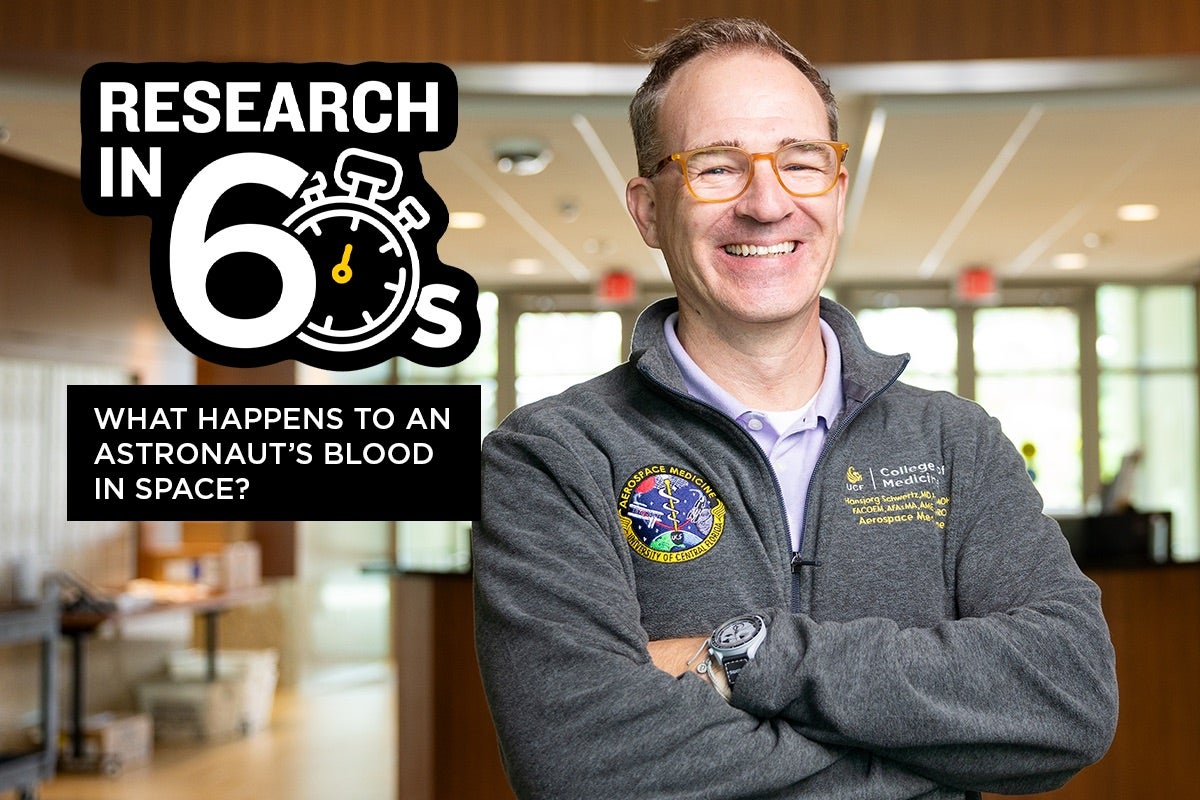
Researchers at UCF are studying platelets and the bone marrow cells that produce them, called megakaryocytes, to better understand changes in blood clotting and immune regulation during spaceflight. The work is led by Hansjorg Schwertz, an assistant professor of aerospace medicine and associate director for translational aerospace medicine research at the UCF Center for Aerospace and Extreme Environments Medicine.
The laboratory has focused on how platelets carry RNA blueprints and can build new proteins when activated, even though they lack a nucleus. A flight experiment on the International Space Station is part of the research. Schwertz credits family, mentors, students and collaborators, including colleagues at the University of Utah, for the team effort.
UCF’s Division of Aerospace Medicine supports research into how microgravity, radiation and isolation affect the human body, with the goal of improving care for people in space and on Earth.
Press release issued by UCF Today:
https://www.ucf.edu/news/research-in-60-seconds-what-happens-to-astronauts-blood-in-space/
Source: linked above. Spotted something wrong? Email corrections@theorlandoconnect.com.