
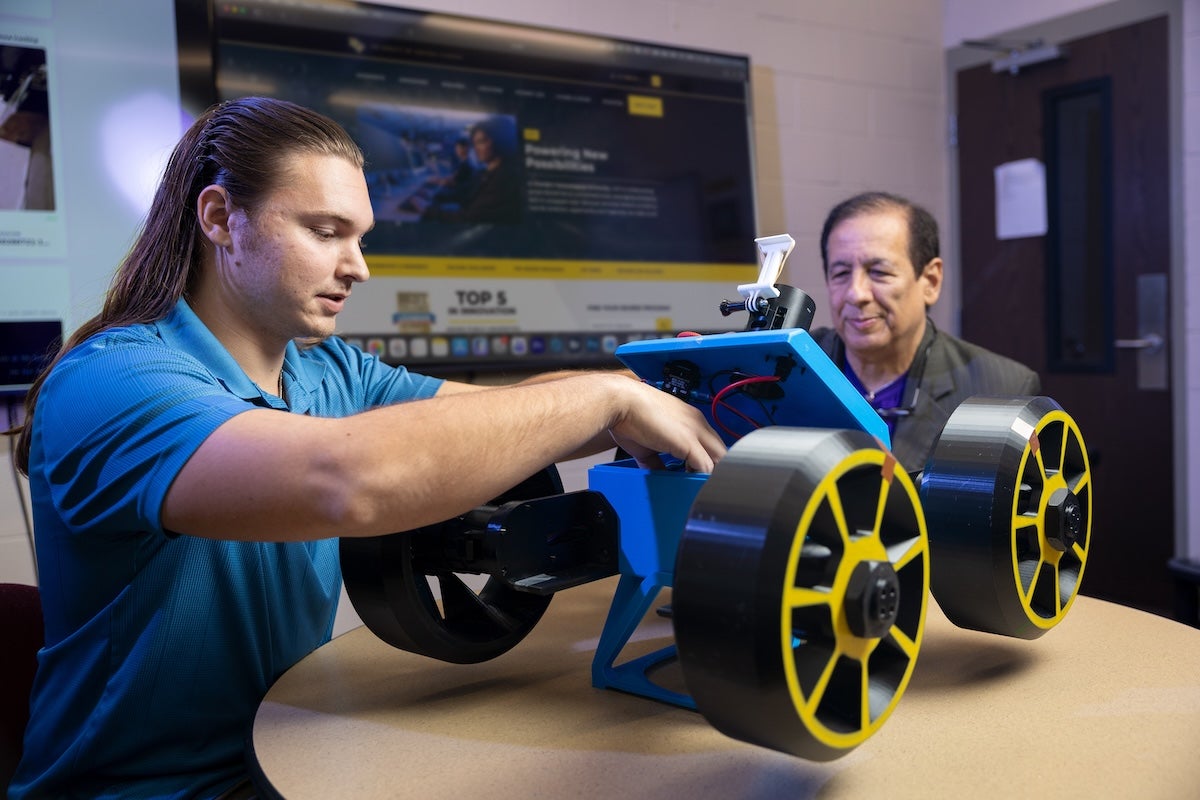
UCF engineers are creating an AI‑driven digital twin to support robotic exploration when communication with Earth is delayed. Professor Luis Rabelo leads a team of undergraduate researchers, with input from planetary scientist Phillip Metzger and graduate student Carson Gray, to develop software that mirrors a rover’s movements in a virtual environment. The project builds on an international collaboration with the Universidad Politécnica de Durango and an earlier senior design effort during the 2025‑26 academic year.
The team uses the Research and Education Regolith Advanced Surface Systems Operations Robot, a low‑cost, 3D‑printed platform adapted from NASA’s RASSOR mining robot. Each rover costs approximately $400 and is equipped with an iPhone camera and LiDAR sensor that generate a real‑time 3D representation of the robot and its surroundings. The digital twin updates second by second, allowing operators to test commands and anticipate obstacles before they are sent to the physical rover.
A test scenario includes a simulated three‑second delay in each direction, creating a six‑second round‑trip communication lag. By evaluating rover behavior in the virtual model, operators can identify potential problems and increase confidence in executing commands on the actual rover in unfamiliar lunar or planetary terrain.
Press release issued by UCF Today:
https://www.ucf.edu/news/ucf-engineers-develop-digital-rover-twin-to-help-navigate-future-nasa-missions/
Source: linked above. Spotted something wrong? Email corrections@theorlandoconnect.com.