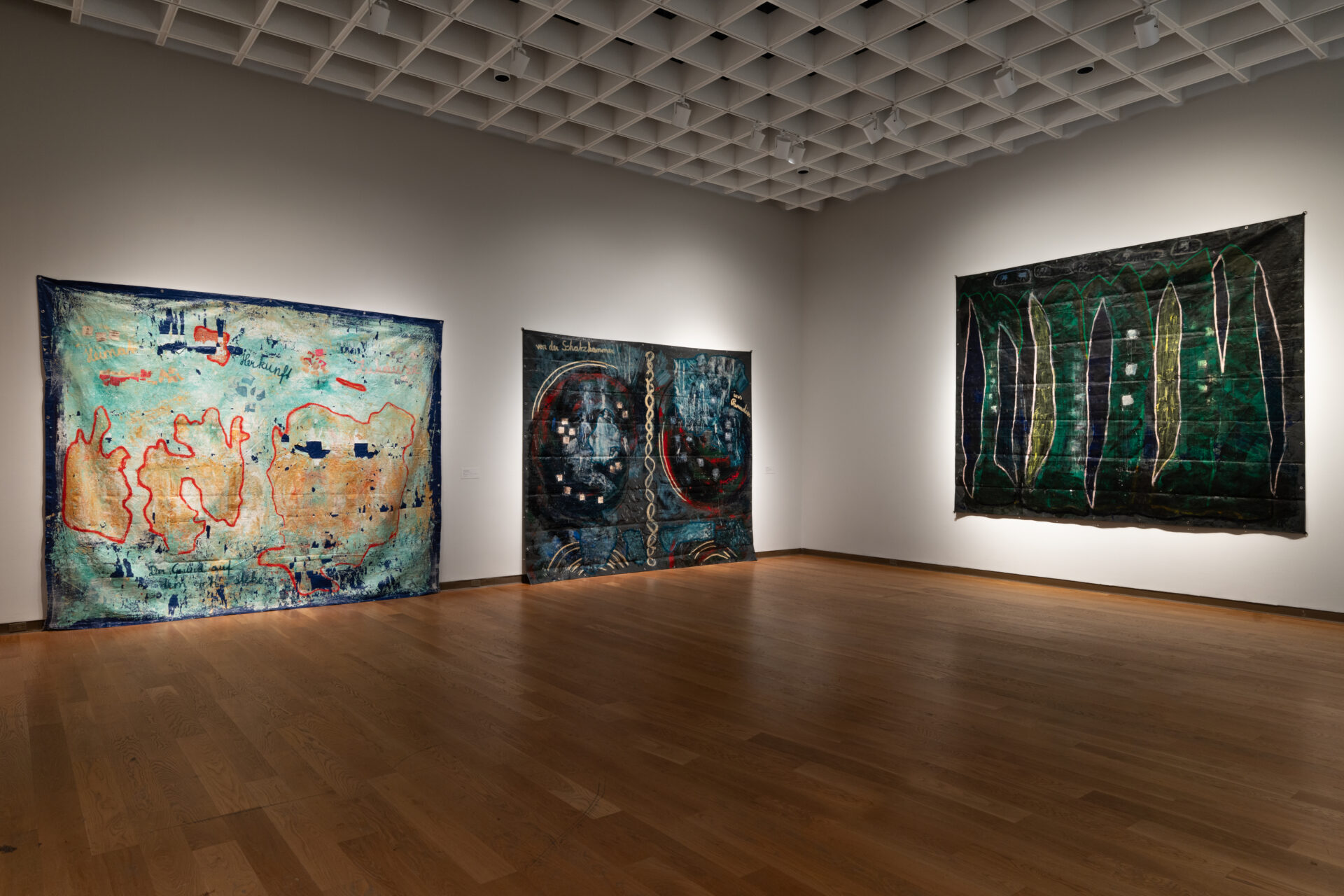
Contemporary art is often known for breaking with history in search of the new, but the Orlando Museum of Art notes that part of what defines it is a turn to art history for inspiration. Artists may refer to earlier works, revive old symbols, or apply techniques used throughout art history to modern subjects. Works in the museum's 12th Annual Florida Prize in Contemporary Art, an exhibit for contemporary artists from across the state, show several of these approaches.
One work on view, Francisco Masó's The Coronation of Gladiolus (2026), echoes the composition of Jacques-Louis David's The Coronation of Napoleon (1805-1807), including its gold leaf and narrow vertical paneling. According to the museum's Chief Curator, Coralie Claeysen-Gleyzon, Masó replaces the imperial coronation with the Damas de Blanco, Cuban women and relatives of imprisoned political activists marching silently in white while holding gladiolus flowers.
OMA Associate Curator Katherine Page writes that the artist Ema Ri draws on Baroque vanitas paintings and Roman memento mori art, using floral imagery of seedlings and blossoms for themes of grief and the release of attachments, along with elements of Tonalism and Impressionism. Masó's shirt-pattern paintings, taken from documentary photographs of Cuban state security agents, recall Hard-edge painting. The museum also cites Mette Tommerup, whose large paintings are inspired by the Color Field movement, and Robert Rauschenberg, whose work used found and appropriated imagery.
Press release issued by Orlando Museum of Art:
https://omart.org/news/how-contemporary-artists-respond-to-historical-art/
🤖 AI-assisted content notice: This item was written with AI assistance from the source document linked above. The underlying facts come from that public source, not from our own reporting. No quotes, interviews or original reporting are implied. Spotted something wrong? Email corrections@theorlandoconnect.com.